
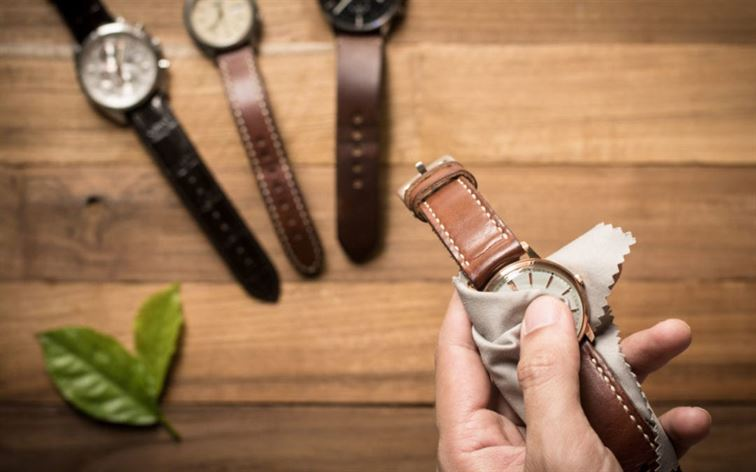
Einleitung: Mehr als nur der Kauf – Die wahren Kosten des Uhrenbesitzes
Beim Kauf einer neuen Uhr weisen Verkäufer oft auf einen wichtigen Punkt hin: Externe Komponenten und Zubehörteile sind in der Regel nicht von der kostenlosen Garantie abgedeckt. Besonders das Uhrenarmband spielt dabei eine wichtige Rolle im Hinblick auf Abnutzung im Alltag. Design und Material eines Armbands sind so vielfältig und individuell wie die Uhr selbst – von robusten Metallarmbändern bis hin zu edlen Lederarmbändern. Seine Langlebigkeit – und damit Ihre Zufriedenheit – hängt jedoch maßgeblich von der richtigen Pflege ab.

Tatsächlich weisen verschiedene Armbandarten naturgemäß unterschiedliche Lebensdauern auf. Ein Metallarmband ist beispielsweise in der Regel deutlich haltbarer als ein Lederarmband. Ungeachtet dieser materialbedingten Eigenschaften kann jedoch eine sorgfältige und umsichtige Pflege die Lebensdauer jedes Armbands erheblich verlängern und die üblichen Erwartungen weit übertreffen. Ebenso wichtig für die langfristige Funktionsfähigkeit der Uhr ist es, die internen Mechanismen vor Umwelteinflüssen zu schützen.
Dieser umfassende Leitfaden geht detailliert auf die Pflegehinweise für die gängigsten Armbandmaterialien ein und bietet wichtige Ratschläge zur Erhaltung des empfindlichen Herzstücks Ihres mechanischen Wunders.
I. Pflege des Armbands: Ästhetik und Unversehrtheit erhalten
Das Armband Ihrer Uhr trägt wesentlich zu deren Ästhetik und Tragekomfort bei. Die Kenntnis der spezifischen Anforderungen jedes Materials gewährleistet den Erhalt seiner Schönheit und Langlebigkeit.
A. Die Kunst der Konservierung edler Lederriemen

Edle Lederarmbänder, oft in Kombination mit hochwertigen Uhren, verleihen ihnen einen Hauch klassischer Eleganz. Ihr Austausch kann jedoch kostspielig sein, was die Wichtigkeit der vorbeugenden Pflege unterstreicht.
-
Feuchtigkeitsmanagement: Leder ist sehr anfällig für Wasserschäden. Vermeiden Sie längeren Kontakt mit Wasser, hohe Luftfeuchtigkeit und starkes Schwitzen, da dies zu Verformungen, Verfärbungen und einer Schwächung des Materials führen kann.
-
Sonneneinstrahlung: Längere Aufenthalte in direktem Sonnenlicht können dazu führen, dass Leder ausbleicht, austrocknet und steif wird, was seine Optik und Geschmeidigkeit beeinträchtigt.
-
Chemische Verunreinigungen: Echtes Leder kann durch bestimmte Substanzen verfärbt werden. Vermeiden Sie daher unbedingt den Kontakt mit Kosmetika, Parfums, Ölen und Reinigungsmitteln, da diese Flecken verursachen oder die Oberfläche des Leders beschädigen können.
-
Aufbewahrungshinweise: Bewahren Sie Ihre Uhr mit Lederarmband bei Nichtgebrauch an einem kühlen, trockenen Ort ohne direktes Licht auf, idealerweise in der Originalverpackung oder einer separaten Uhrenbox mit ausreichender Belüftung.
B. Sorgfältige Pflege von Metallarmbändern

Metallarmbänder sind zwar von Natur aus robuster als Lederarmbänder, aber nicht völlig unempfindlich gegenüber Abnutzung und benötigen eine eigene, spezifische Pflege, um ihren Glanz zu erhalten.
-
Regelmäßige Reinigung: Bei regelmäßig getragenen Uhren empfiehlt sich eine zweimal jährliche gründliche Reinigung des Metallarmbands, um dessen Glanz zu erhalten. Der Vorgang ist täuschend einfach, erfordert aber Geduld und Sorgfalt.
-
Vorbereitung: Verwenden Sie eine weiche Bürste (z. B. eine spezielle Uhrenbürste oder eine sehr weiche Zahnbürste), die mit etwas milder Seife und lauwarmem Wasser befeuchtet wird.
-
Sanftes Schrubben: Bürsten Sie das gesamte Armband vorsichtig ab und achten Sie dabei besonders auf die Glieder und Spalten, in denen sich Schmutz und Ablagerungen ansammeln können.
-
Abspülen: Spülen Sie das Armband gründlich unter sauberem, lauwarmem Wasser ab, um alle Seifenreste zu entfernen.
-
Trocknen: Trocknen Sie das Armband sofort und vollständig mit einem weichen, fusselfreien Tuch. Achten Sie darauf, dass keine Feuchtigkeit in den Gliedern zurückbleibt.
-
Warum reinigen? Die Ansammlung von menschlichem Schweiß, Hautfetten und Umweltschmutz kann im Laufe der Zeit zu Korrosion der Metallkomponenten führen, die Oberfläche stumpf machen und möglicherweise Hautreizungen verursachen.
-
Vorgehensweise nach Exposition: Nach Kontakt mit Salzwasser oder chloriertem Poolwasser ist eine sofortige Reinigung mit der oben genannten Methode unerlässlich, um Korrosionsschäden zu vermeiden.
-
Für lange Haltbarkeit: Achten Sie darauf, dass Ihr Armband die richtige Größe für Ihr Handgelenk hat. Ein zu lockeres Armband kann zu erhöhter Reibung und Scheuern an Oberflächen führen und so den Verschleiß beschleunigen.
-
Kratzerschutz: Beachten Sie, dass selbst robuste Materialien wie Edelstahl und Edelmetalle (Gold, Platin) durch alltäglichen Kontakt kratzempfindlich sind. Seien Sie daher besonders vorsichtig bei Aktivitäten, bei denen Stöße oder Abrieb zu erwarten sind.
C. Widerstandsfähigkeit und Pflege von Gummibändern

Kautschukarmbänder erfreuen sich insbesondere bei Sportuhren großer Beliebtheit, da sie schweiß- und abriebfest sind. Allerdings benötigen auch sie die richtige Pflege.
-
Chemikalienvermeidung: Vermeiden Sie den Kontakt mit aggressiven Chemikalien wie Nagellackentfernern, Lösungsmitteln und starken Reinigungsmitteln, da diese das Gummimaterial angreifen und es dadurch spröde oder verfärben können.
-
Mäßigung bei Sonneneinstrahlung: Obwohl Gummi robust ist, kann eine längere und intensive Einwirkung direkter Sonneneinstrahlung die Materialeigenschaften beeinträchtigen und möglicherweise zu vorzeitiger Alterung oder Verfärbung führen.
-
Ideale Reinigungsmethode: Die effektivste Methode zur Erhaltung der Unversehrtheit eines Gummiarmbands ist eine einfache Reinigung mit Wasser und Seife.
-
Vorbereitung: Verwenden Sie eine milde Seife und lauwarmes Wasser.
-
Bürsten: Reiben Sie den Riemen vorsichtig mit einer weichen Bürste ab, um Schmutz und Ablagerungen zu entfernen.
-
Spülen & Trocknen: Gründlich mit sauberem Wasser ausspülen und mit einem weichen Tuch vollständig trocknen.
II. Erhaltung des Uhrenkopfes: Schutz des Uhrwerks und des Gehäuses
Abgesehen vom Armband erfordert das Uhrengehäuse selbst mit seinem komplexen Uhrwerk und dem filigranen Gehäuse sorgfältige Pflege, um seine langfristige Leistungsfähigkeit und ästhetische Wirkung zu gewährleisten.
A. Die Notwendigkeit regelmäßiger Wartung

Wie jedes hochentwickelte Präzisionsinstrument benötigt auch Ihre Armbanduhr regelmäßige professionelle Wartung, um ihren einwandfreien Betrieb dauerhaft zu gewährleisten.
-
Variable Wartungsintervalle: Als Faustregel gilt eine Wartung alle 3 bis 5 Jahre. Das genaue Intervall kann jedoch je nach Uhrwerk (z. B. erfordern Chronographenfunktionen möglicherweise eine häufigere Wartung), dem lokalen Klima des Trägers (extreme Temperaturen oder Luftfeuchtigkeit) und den individuellen Nutzungsgewohnheiten erheblich variieren.
-
Über die Reparatur hinaus: Proaktive Wartung zielt nicht auf „Reparatur“, sondern auf „Erhaltung“ ab. Regelmäßige Wartung verjüngt die Uhr, indem verschlissene Teile ausgetauscht, Schmierstoffe erneuert und ihre Ganggenauigkeit und Zuverlässigkeit dauerhaft sichergestellt werden. So werden kostspielige Probleme in Zukunft vermieden. Dieser Ansatz verlängert die Lebensdauer Ihrer wertvollen Uhr und schont Ihren Geldbeutel.
B. Achtsame Alltagspraktiken: Schäden vorbeugen

Bestimmte alltägliche Gewohnheiten sind entscheidend, um Schäden an den internen Mechanismen und externen Bauteilen Ihrer Uhr zu verhindern.
1. Heftige Stöße und Erschütterungen vermeiden
-
Interne Schwachstelle: Trotz ihrer robusten Gehäuse bestehen Uhrwerke aus fein aufeinander abgestimmten, miniaturisierten Teilen. Starke Stöße oder plötzliche Erschütterungen können dazu führen, dass sich empfindliche Komponenten verschieben, lockern oder sogar brechen, was erhebliche Gangabweichungen oder einen kompletten mechanischen Ausfall zur Folge haben kann.
-
Äußere Beschädigungen: Neben der Bewegung selbst können auch starke Stöße zu Dellen, Kratzern oder Rissen am Gehäuse, am Glas oder an der Lünette führen.
2. Die entscheidende Bedeutung der Kronenversiegelung
-
Abhängigkeit von der Wasserdichtigkeit: Bei wasserdichten Uhren ist die Krone oft die anfälligste Stelle für das Eindringen von Wasser. Die meisten wasserdichten Uhren verwenden einen verschraubten oder per Zug zu öffnenden Kronenmechanismus.
-
Nachjustierungsvorgehen: Es ist unbedingt erforderlich, dass die Krone nach jeder Zeiteinstellung oder jedem manuellen Aufziehen vollständig verschraubt oder eingedrückt wird. Andernfalls können Feuchtigkeit, Staub oder sogar Wasserdampf in das Uhrwerk eindringen und irreparable Schäden verursachen.
-
Regelmäßige Wasserdichtigkeitsprüfung: Für funktionale, wasserdichte Uhren, insbesondere solche, die zum Schwimmen oder Tauchen verwendet werden, sind regelmäßige professionelle Wasserdichtigkeitsprüfungen unerlässlich. Dies beinhaltet oft den Austausch von Dichtungen, die mit der Zeit verschleißen und die vorgesehene Wasserdichtigkeit der Uhr beeinträchtigen können.
3. Temperaturempfindlichkeit
-
Materialdynamik: Mechanische Uhren scheinen zwar rein metallische Konstruktionen zu sein, doch verschiedene Komponenten des Uhrwerks sind aus unterschiedlichen Materialien gefertigt, von denen jedes eine eigene Wärmeausdehnungsrate aufweist.
-
Auswirkungen auf die Ganggenauigkeit: Extreme Temperaturen (sowohl extrem hohe als auch extrem niedrige) können die physikalischen Eigenschaften dieser Materialien subtil verändern und dadurch wichtige Toleranzen sowie das präzise Zusammenspiel der Uhrwerkskomponenten beeinträchtigen. Dies kann zu messbaren Abweichungen in der Ganggenauigkeit führen. Vermeiden Sie es, Ihre Uhr über längere Zeiträume direkter Sonneneinstrahlung auf einem Armaturenbrett oder sehr kalten Umgebungen auszusetzen.
4. Schutz vor chemischer Korrosion
-
Oberflächenbeeinträchtigung: Die äußeren Komponenten Ihrer Uhr – Gehäuse, Glas und Armband – können durch direkten Kontakt mit verschiedenen Haushalts- und Körperpflegeprodukten unwiderruflich beschädigt werden.
-
Vermeiden Sie den Kontakt Ihrer Uhr mit Lösungsmitteln, aggressiven Reinigungsmitteln, Parfums, Haarsprays und bestimmten Kosmetika. Diese Substanzen können die Oberflächen der Uhr angreifen, verfärben oder beschädigen und so dauerhafte optische Schäden verursachen.
5. Die Bedrohung durch den Magnetismus
-
Anfälligkeit mechanischer Uhren: Eine der häufigsten Störungen mechanischer Uhren ist die Magnetisierung. In unserem zunehmend technikgeprägten Alltag sind wir fast allgegenwärtig Magnetfeldern ausgesetzt.
-
Magnetische Quellen: Zu den Quellen des Magnetismus zählen Alltagsgegenstände wie Kühlschranktürdichtungen, Lautsprecher, Sicherheitsscanner und sogar Magnetverschlüsse an Taschen oder Handyhüllen.
-
Auswirkungen auf die Genauigkeit: Wenn eine mechanische Uhr magnetisiert wird, kann sich ihre Spiralfeder – ein wichtiges Bauteil zur Regulierung der Zeit – ungleichmäßig aufwickeln, was dazu führt, dass die Uhr unregelmäßig läuft, meistens geht sie zu schnell.
-
Entmagnetisierung: Sollten Sie vermuten, dass Ihre Uhr magnetisiert wurde, kann eine schnelle und einfache Entmagnetisierung durch einen Uhrmacher oft ihre Genauigkeit wiederherstellen.
Durch die Einhaltung dieser fachmännischen Wartungspraktiken erhalten Sie nicht nur eine Uhr, sondern sichern auch ein Erbstück und gewährleisten so deren dauerhafte Präzision, Schönheit und Wert für kommende Generationen.


Aktie:
Das Andreas-Huber-Geheimnis: Die versteckte Signatur, die den Wert Ihrer Vintage-Uhr um Tausende steigert
Von der Stabilisierung zur Erholung: Ein Marktüberblick 2025 und eine strategische Prognose für 2026