
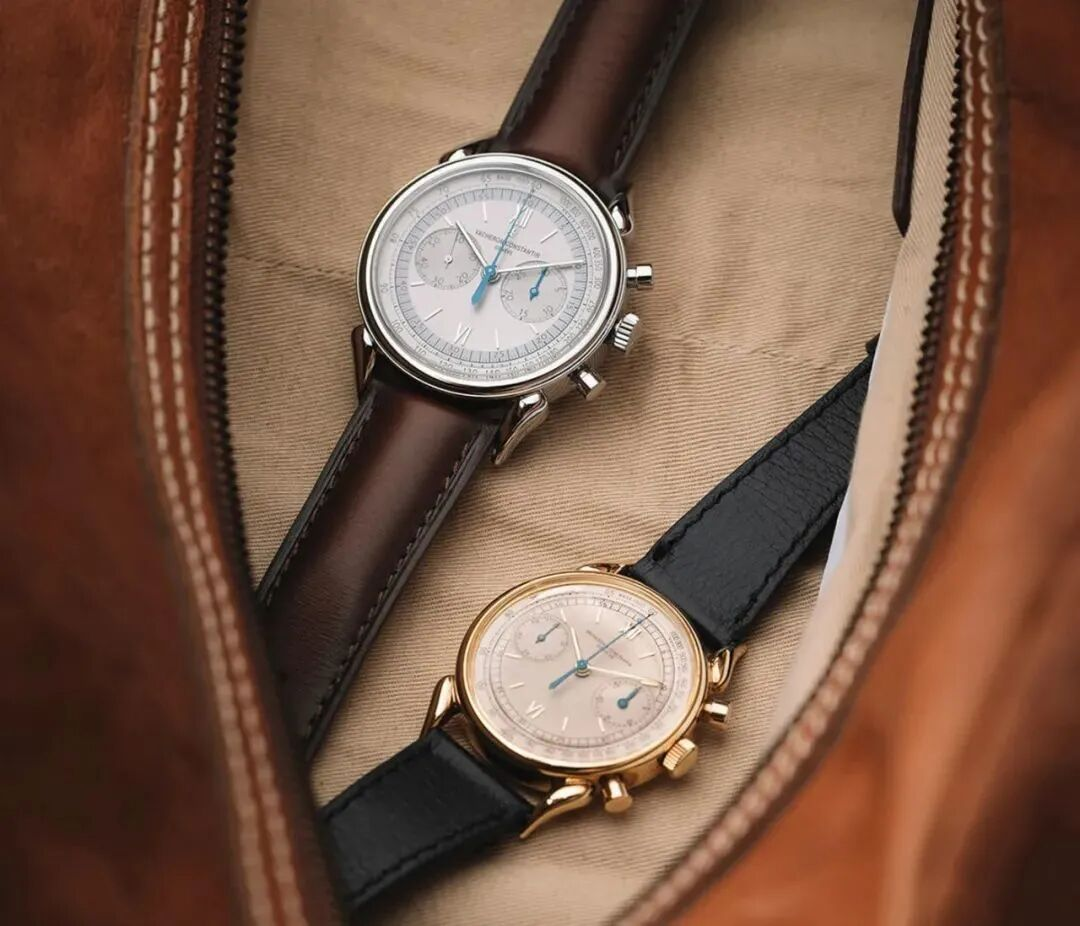
Stepping into the world of luxury watches for the first time can be as exciting as it is daunting. With a universe of iconic models, diverse brands, and technical jargon, knowing where to start can feel overwhelming. To help you navigate this exciting journey, we've broken down the key elements you need to consider, transforming a potentially stressful decision into a confident and enjoyable one.
Here is your essential checklist for choosing the perfect first timepiece.

1. The Seal of Quality: Provenance Matters
Before you look at anything else, understand the significance of where the watch was made.
-
The "Swiss Made" Standard: This isn't just a marketing slogan; it's a legally protected hallmark of quality. The "Swiss Made" label is globally recognized as the gold standard in watchmaking. As of a 2013 federal law, for a watch to bear this mark, at least 60% of its manufacturing value must be generated in Switzerland, and its technical development must also take place there.
-
"Swiss Made" vs. "Manufacture": The "Swiss Made" text on a dial (usually at 6 o'clock) doesn't mean every single component was made in Switzerland. For a watch that meets an even higher, 100% Swiss standard, you'll look to "Manufacture" brands. These are vertically integrated companies that design, produce, and assemble the vast majority of their components—especially the movement—in-house. Given Switzerland's high labor costs, this significantly impacts the price, making these timepieces particularly special and exclusive.

2. The Body and Feel: Case & Lugs
The case is the protective body of the watch, and its material and finishing are crucial.
-
Materials: While top-tier brands like Patek Philippe and Vacheron Constantin often use precious metals (rose gold, white gold, platinum) to signify ultimate luxury, the classic Swiss watch for most buyers features a stainless steel case. The primary reason is cost, but it's also about practicality. Most brands use 316L stainless steel, a high-grade, corrosion-resistant alloy that is also hypoallergenic (nickel-free), preventing skin irritation. A key benefit of steel is that scratches can often be polished out during servicing, restoring its original luster.
-
A Critical Detail: The Lugs: Pay close attention to the lugs—the protrusions that connect the case to the strap or bracelet. On a high-quality watch, these will be smoothly finished with no sharp angles. On a poorly made watch, they might have sharp edges that can snag clothing, fray shirt cuffs, or even scratch your skin. Run your finger over them to check the finish.

3. The Connection: Bracelet or Strap?
How the watch attaches to your wrist is a matter of both comfort and style.
-
Bracelet: For a metal bracelet, comfort is paramount. Ensure the links are well-polished and articulate smoothly without pinching your skin. The edges should feel rounded, not sharp.
-
Strap: Anything non-metal—be it leather, rubber, or fabric—is called a strap. The options here are endless and dramatically affect the watch's character.
-
Leather: Options range from classic calfskin to exotic alligator.
-
Rubber: Ideal for dive watches and sport models due to its water resistance and durability.
-
Fabric: Stylish NATO straps, woven from various materials, have become popular even on high-end collectible watches, offering a casual and versatile look.
Remember, the right strap can complement a watch's design, while the wrong one can disrupt its entire aesthetic.

4. The Face of Time: The Dial
The dial is where function meets artistry. When evaluating it, focus on these elements in order:
-
Color and Finish: Dials come in countless colors and finishes (e.g., sun-brushed, silver-plated, enameled). Start with what color palette appeals to you most.
-
Legibility: This is fundamental. Can you tell the time at a glance? If the watch has other functions (like a chronograph), are those subdials easy to read?
-
Luminescence ("Lume"): Test the watch in a dark environment. Does the dial have luminescent material on the hands and hour markers? If so, how bright and long-lasting is it?
-
Dial Text: The words on the dial tell a story.
-
"Swiss Made" confirms its origin.
-
"Automatic" indicates it has a self-winding mechanical movement.
-
On more exquisite luxury watches, you might see terms like "Guilloché Main" (indicating a hand-turned decorative pattern) or "Email Grand Feu" (signifying a difficult and highly prized enameling technique).

5. The Heartbeat: The Movement
The movement is the engine that powers the watch. For a beginner, the choice is simple and comes down to two main types.
-
Mechanical Movement: This is the soul of traditional watchmaking. It uses a complex system of gears, springs, and levers, powered by energy stored in a wound mainspring. An "Automatic" mechanical movement is wound by the natural motion of your wrist. Its major advantage is that it requires no battery and represents centuries of craftsmanship.
-
Quartz Movement: This movement is powered by a battery that sends an electrical pulse through a quartz crystal, causing it to vibrate at a precise frequency (32,768 times per second). Quartz watches are highly accurate, durable, and generally more affordable.
The Easiest Way to Tell: Look at the seconds hand. A quartz watch’s seconds hand "jumps" from one second to the next (tick-tick-tick). A mechanical watch’s seconds hand has a smooth, sweeping motion across the dial.

6. Beyond Telling Time: Complications
In watchmaking, a "complication" is any function on a watch that does more than tell the hours, minutes, and seconds.
-
Common Complications:
-
Chronograph: One of the most popular complications for men's watches, it acts as a stopwatch.
-
Moonphase: A highly popular complication in women's watches, this displays the current phase of the moon in an elegant aperture on the dial.
-
Calendar Complications: These display the date in varying levels of complexity:
-
Date: Shows the day of the month (e.g., "15").
-
Day-Date: Shows the day of the week and the date (e.g., "Monday 15").
-
Triple Calendar: Shows the day, date, and month.
-
Annual Calendar: A sophisticated complication that automatically adjusts for months with 30 and 31 days. It only needs to be manually corrected once per year, at the end of February.
-
Perpetual Calendar: The pinnacle of calendar complications. It accounts for months of all lengths, including leap years, and won't need any adjustment until the year 2100.
Armed with this knowledge, you're now ready to make an informed and confident choice. Happy hunting
Aktie:
The Pre-Owned Luxury Watch Market: First Rise in Three Years