

The New Market Paradigm – Beyond the Boutique Windows
In recent years, a profound shift has altered the global luxury watch landscape: the secondary market has rapidly evolved from a niche, fragmented trading floor into an institutional force. Historically viewed as a mere byproduct of primary retail, the pre-owned market has achieved unprecedented transaction volumes and structural transparency. Today, it functions as the ultimate barometer for a brand’s real-world equity and immediate consumer demand. Modern collectors no longer evaluate a timepiece solely by its official retail price tag; instead, they cross-reference historical data and secondary market performance to calculate the true asset value of their next acquisition.
This explosive growth naturally invites a critical question from industry insiders and watch enthusiasts alike: is this massive multi-billion-dollar pre-owned ecosystem actively cannibalizing the sales of brand-new timepieces?

The data indicates that the relationship is far more symbiotic than destructive. Rather than stealing business from primary authorized dealers, the secondary market has become a mirror that validates primary brand strength. High secondary premiums build a powerful psychological feedback loop that amplifies consumer desire, while market-driven corrections offer clear, unvarnished insight into shifting consumer tastes. At EW Watches, we believe that understanding the intricate interplay between primary retail and secondary market movement is no longer optional—it is the foundational playbook for navigating the modern era of haute horology.
The Rolex Monopoly – A $26 Billion Phenomenon
To truly comprehend the staggering scale of the secondary market, one must look closely at the cornerstone of the entire luxury watch industry: Rolex. Long considered the safe-haven asset of haute horology, the total market footprint of the Crown extends far beyond the production numbers officially reported on corporate balance sheets.

According to data compiled by Morgan Stanley and LuxeConsult, Rolex generates an estimated annual wholesale revenue of roughly 11 billion CHF. When tracked all the way to the primary retail counters globally, that consumer expenditure climbs to approximately 16.1 billion CHF. However, the true shockwave hits when we integrate EveryWatch's data from the secondary ecosystem. In 2025, the global sales of Rolex timepieces across international auction houses and pre-owned retailers reached a massive $5.7 billion USD.
-
The $26.4 Billion Super-Ecosystem: When you combine the primary retail revenue with the secondary market turnover, the total economic footprint of Rolex in 2025 reaches an estimated $26.4 billion USD.
-
The Scale of Dominance: To put this mind-boggling figure into perspective, Rolex’s combined market ecosystem is nearly equal to the total primary and secondary sales of seven of its greatest competitors combined: Patek Philippe, Audemars Piguet, Cartier, Omega, Richard Mille, Longines, and Vacheron Constantin.
-
The 1-in-5 Liquidity Rule: This vast discrepancy is driven largely by Rolex’s traditional wholesale business model, which relies on a network of third-party Authorized Dealers (ADs). This fuels a highly liquid secondary ecosystem where pre-owned transactions now account for roughly 20% of the brand's total global footprint. Statistically, for every five Rolex watches changing hands in the global market, one is moving through a secondary transaction.
Symbiosis vs. Cannibalization – Why Authorized Retailers Still Win

When secondary market metrics reach this multi-billion-dollar scale, it raises an inevitable question: does a highly liquid pre-owned market actively damage factory-new watch sales? The real-world mechanics of the industry suggest the opposite. Instead of cannibalizing retail showrooms, the secondary market acts as a powerful psychological engine that fuels primary consumer demand.
-
The Premium Feedback Loop: Long waiting lists at Rolex Authorized Dealers (ADs) remain stubbornly intact for highly coveted sports models. In these instances, high secondary market premiums do not deter buyers; rather, they validate the brand's exclusivity and intensely accelerate consumer desire to secure a piece at the official retail MSRP.
-
The Strategic Nature of Under-Retail Discounts: Conversely, the market also displays predictable corrections where certain references trade below retail price tags. Joint market data from Morgan Stanley and WatchCharts reveals that the Rolex Sea-Dweller family trades at an average discount of 22.8% on the pre-owned market, while the Explorer series reflects roughly a 12% markdown.
-
The Value of the Long Game: Despite these readily available secondary market discounts, sophisticated western collectors rarely abandon their primary retail relationships. To a serious horological investor, maintaining a consistent allocation history with an official dealer carries immense long-term value. Establishing a vetted purchasing profile at the boutique level remains the only viable path to securing priority access to the highly gatekept, ultra-rare allocations that offer guaranteed long-term equity appreciation.
The Polarized Giants – Audemars Piguet & Patek Philippe Price Divergence

While Rolex exhibits uniform liquidity across its entire catalog, shifting the focus to top-tier haute horology manufactures reveals a much more fragmented and highly polarized pricing matrix. In the secondary market, Audemars Piguet and Patek Philippe clearly demonstrate that a brand’s macro-reputation no longer guarantees equal performance across different product lines.
-
Audemars Piguet's Internal Divide: The market data presents a classic study in hyper-concentration. The iconic Royal Oak core collection successfully maintains an average secondary market premium of roughly 25% over official retail pricing. However, this intense demand fails to spill over into the brand's alternative design silhouettes; the Royal Oak Offshore series sits at an average secondary market discount of 23.5%, while the contemporary CODE 11.59 collection faces a sharper markdown of 36.5%.
-
Patek Philippe's Two-Tiered Ecosystem: The Stern family’s manufacture showcases an even more dramatic economic contrast between lifestyle sports references and traditional grand craft. Patek Philippe's steel and precious metal sports models completely dominate the secondary landscape: the Aquanaut line commands an astronomical 80% average premium, the newly debuted Cubitus collection captures a robust 68% markup, and the legendary Nautilus family firmly holds a premium close to 60% above MSRP.
-
The Dress Watch Value Window: Concurrently, Patek Philippe’s historic horological keystones are experiencing a noticeable softening. The highly technical Complications series trades at an average secondary discount of 34% below retail, while the ultra-classic, minimalist Calatrava dress watch collections sit at roughly 35% below MSRP. For the value-driven connoisseur, this divergence creates a gold mine: it allows collectors to acquire some of the world's most elite, hand-finished complications at a profound fraction of retail cost.
The Sovereign Strategy – Richard Mille’s Closed Ecosystem

Amid these massive secondary market fluctuations, Richard Mille stands as a fascinating structural anomaly, employing a radically different operational strategy to preserve its absolute brand equity. Rather than allowing its ultra-high-end avant-garde timepieces to enter the wild west of the open secondary market, the brand enforces a strict, closed-loop distribution model.
-
Certified Pre-Owned Dominance: Richard Mille aggressively regulates the velocity and location of its secondary transactions. The vast majority of pre-owned RM pieces are rerouted back through the brand's official Certified Pre-Owned (CPO) boutiques or strictly vetted premium international auction houses.
-
Eliminating Volatility: By severely restricting the volume of inventory available to independent, unvetted secondary dealers, Richard Mille successfully prevents speculative market flooding. This calculated lack of unregulated secondary liquidity ensures that the brand maintains its extreme aura of artificial scarcity, effectively insulating its multi-hundred-thousand-dollar price floors from the typical macroeconomic corrections seen elsewhere in the industry.
Conclusion – Smart Collecting in a Dual-Market Era
Ultimately, the empirical data clarifies a critical misconception: the secondary market is not a parasitic force destroying primary watch sales. Instead, they are two sides of the same economic coin, forming a deeply intertwined ecosystem that continuously rewires the competitive rules of luxury horology. The pre-owned market provides a transparent, real-time mirror of actual consumer behavior, stripping away marketing hype to reveal true cultural value.
For the sophisticated modern collector, this dual-market reality should not inspire hesitation; it should inspire strategy. Secondary market premiums highlight the immediate, red-hot desires of pop culture, while secondary market corrections offer brilliant value windows to acquire foundational, hand-finished masterpieces at highly advantageous entry points. Navigating this terrain requires an advisor who looks beyond the boutique window to understand the global macroeconomic forces driving every single tick of the dial.


Aktie:
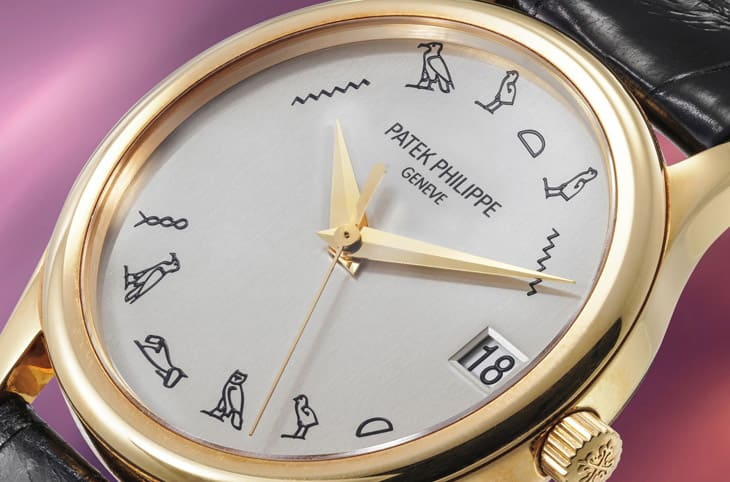
The $500,000 Time Capsule: Patek Philippe’s Ref. 3998J "Hieroglyphic" Sets a New Legend