
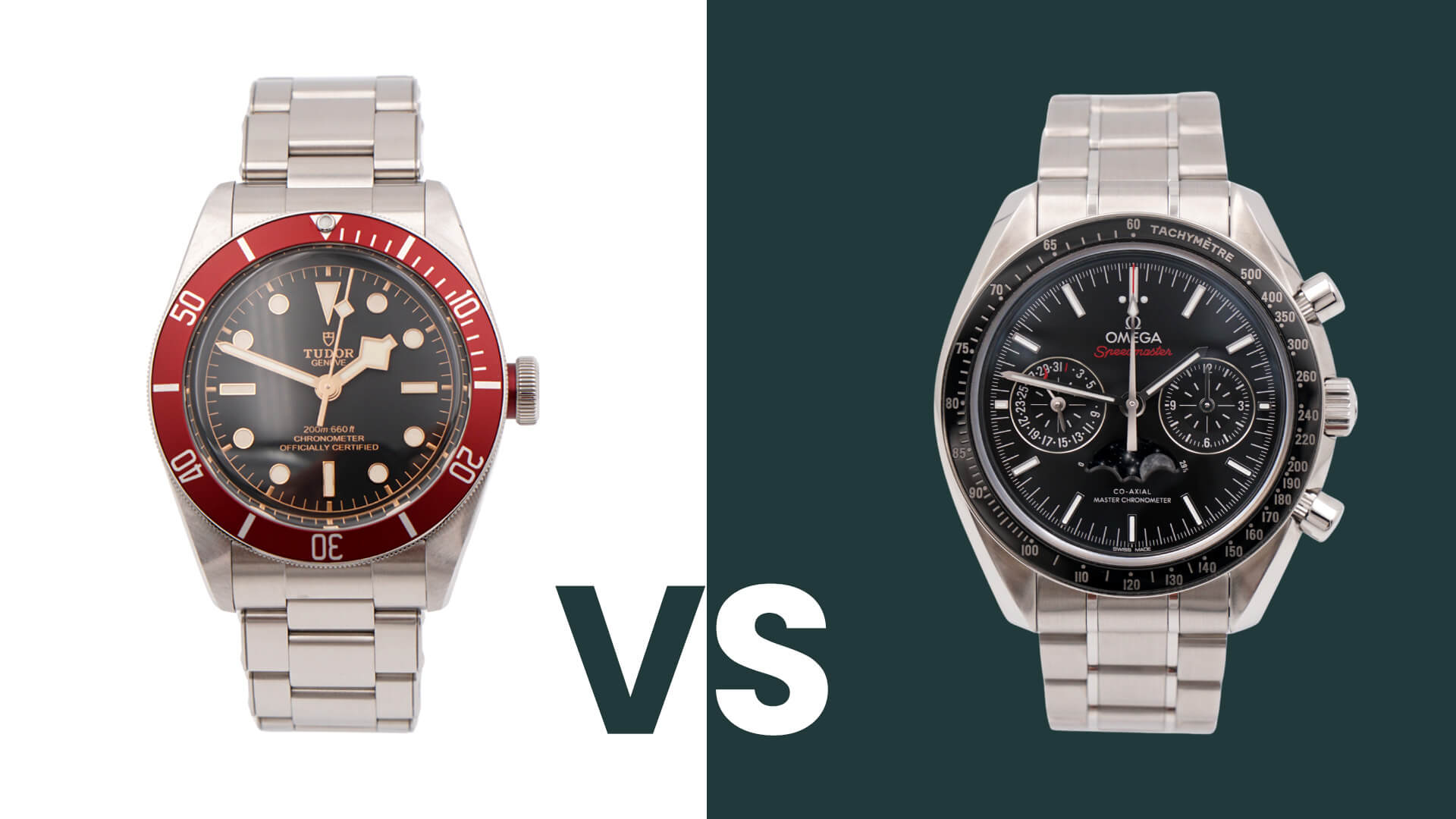
The Great Professional Watch Dilemma
In the landscape of luxury horology, the space between $3,000 and $7,000 represents the most competitive arena in the world. It is here that two giants—Tudor and Omega—clash for the loyalty of the modern collector.

For many enthusiasts, the decision is a grueling one. On one side, you have Omega: a brand with a history that reached the moon, mastered the depths of the ocean with James Bond, and serves as the pinnacle of Swiss technical precision. On the other, you have Tudor: the "born to dare" challenger that has successfully stepped out from the shadow of its older brother, Rolex, to become the definitive voice of vintage-inspired tool watches.
Both brands offer watches that are virtually neck-and-neck in terms of build quality, movement reliability, and aesthetic appeal. Choosing between them isn't just about picking a timepiece; it’s about deciding which horological philosophy aligns with your lifestyle. Are you looking for the cutting-edge, "Master Chronometer" prestige of an industry titan, or the rugged, understated charm of a modern classic?
At EW Watches, we specialize in both worlds. We understand that whether you lean toward the technical brilliance of a Seamaster or the historic soul of a Black Bay, the most important factor is seeing these masterpieces side-by-side. Our curated collection of Omega and Tudor timepieces is designed to help you make that final, decisive choice with confidence.
Brand Heritage & Identity – Prestige vs. Purpose

Choosing between Omega and Tudor often comes down to what you want your watch to say about you. Both brands carry immense historical weight, but they occupy very different spaces in the cultural zeitgeist.
Omega: The Professional Statement
Omega is a brand that is synonymous with "firsts." From being the first watch on the moon to serving as the Official Timekeeper of the Olympic Games since 1932, Omega represents a global standard of excellence. When you wear an Omega Seamaster or Speedmaster, you are wearing a brand that is universally recognized as a symbol of professional success. It is the choice of the astronaut, the secret agent, and the executive alike. Its identity is polished, technologically forward, and undeniably prestigious.
Tudor: The Bold Challenger
Tudor’s identity was historically tied to Rolex, created by Hans Wilsdorf to offer the same legendary reliability at a more accessible price point. However, in the last decade, Tudor has undergone a "Born to Dare" revolution. It has successfully pivoted from being a "substitute" to becoming the preferred choice for the "insider"—the collector who values a rugged, tool-watch aesthetic and a bit of rebellious spirit. A Tudor Black Bay or Pelagos suggests a wearer who appreciates horological history and "if you know, you know" coolness over mainstream recognition.
Movement & Engineering – The Battle for METAS Supremacy

In 2026, the technical gap between these two brands narrowed significantly, as both now compete for the industry's most rigorous certification: the Master Chronometer (METAS).
Omega: The Co-Axial Masterpiece
Omega remains the undisputed pioneer of mass-produced, high-precision movements. Their Co-Axial Master Chronometer calibers are famous for their anti-magnetic properties—resistant to fields of at least 15,000 gauss. Beyond performance, Omega movements are beautifully finished with "Côtes de Genève" in arabesque, often visible through sapphire crystal casebacks.
-
Official Resource: Learn more about the rigorous Omega METAS Testing Standards.
Tudor: The Kenissi Revolution
Tudor has shaken the industry by developing its own "Manufacture" calibers through its movement arm, Kenissi. While Tudor movements were traditionally "closed" (hidden behind steel casebacks), their latest releases have moved toward the same METAS standards as Omega. Tudor movements are designed for extreme durability and long service intervals, focusing on "industrial beauty" and rock-solid stability.
-
Official Resource: Explore the Tudor Master Chronometer Certification.
Design DNA – Modern Sleekness vs. Vintage Tool Vibes
The choice between Omega and Tudor often reflects a preference for either modern luxury or historical charm. This is most evident when comparing their flagship models side-by-side.

The Dive Watch Duel: Seamaster vs. Black Bay
The Omega Seamaster Professional 300M is a masterclass in modern engineering. With its ceramic "wave" dial, helium escape valve, and skeleton hands, it feels like a high-tech instrument designed for the 21st century.
Conversely, the Tudor Black Bay series—specifically the 58 and 54—takes you back to the golden age of skin diving. By omitting the date window on many models and utilizing matte aluminum bezels and "Snowflake" hands, Tudor captures a warm, nostalgic aesthetic that feels timeless rather than trendy.
The "Everyday" Champion: Aqua Terra vs. Black Bay 31/36/39/41
If you are looking for a "one-watch collection," the Omega Aqua Terra 150M offers a polished, versatile look with its teak-deck inspired dials. In contrast, the Tudor Black Bay (Smooth Bezel) lineup offers a more utilitarian, understated elegance. While the Omega shines in a boardroom setting, the Tudor feels right at home on a rugged weekend adventure.
Secondary Market Performance & The Final Verdict
When investing in a luxury timepiece, understanding its long-term value is essential. In the secondary market, both brands occupy a "blue-chip" status but for different reasons.

Market Liquidity
Tudor benefits significantly from its shared DNA with Rolex. Because of this association and the brand’s consistent design language, popular models like the Black Bay Chrono or the Pelagos 39 tend to hold their value remarkably well and are highly liquid.
Omega, while having a broader range of models which can lead to more varied depreciation, possesses "untouchable" icons. The Speedmaster Professional and Seamaster 300M are staple assets in the watch world. At EW Watches, we consistently see high demand for these models, ensuring that your purchase remains a stable store of value.
Which One Belongs on Your Wrist?
Ultimately, the battle between Tudor and Omega has no loser—only two different types of winners.
-
Choose Omega if: You value industry-leading movement technology, iconic brand recognition, and a polished, contemporary design that feels like a reward for your professional milestones.
-
Choose Tudor if: You are a purist who loves the "tool-watch" philosophy, vintage-inspired aesthetics, and the incredible build quality that comes from the most prestigious lineage in watchmaking.
The best way to decide is to experience them for yourself. Explore our curated selection of both Tudor and Omega masterpieces at EW Watches today and find the one that speaks to your story.


Aktie:
The Rolex Discontinued List 2026: Why "Gone" is the Ultimate Opportunity for Collectors
Rolex: The Unfiltered Truth – A Deep Dive into the Pros and Cons of Every Icon